While I was in England this summer, I took a weekend to see my good friend E. in the Leeds area. She asked me what I wanted to do and I said, "Let's go to that adorable town, Knaresborough, that I keep seeing from the train on the way to York." (Note: that's on the line to and from Ilkley, which is the line my friend is on, so I've ridden that route a couple of times before or after visiting her and also going to York for various reasons.) And she said she hadn't been there since she was a kid and would love to go back, so go we did. And it turned out to be the *perfect* place to have a picnic lunch and spend an intermittently sunny and pleasant English Sunday with a friend and her three-year-old little girl, as well as a place of interest to medievalists in the area temporarily or permanently (I'm looking at you, TO'D!), as well as anyone else who's looking to do something in Yorkshire and has visited all the usual suspects.
First of all, you might be wondering what it was I could see from the train that so delighted me. Well, first of all, let me give you a view of where the train passes through. The following picture is one I stitched together from three or four other photos and is taken from the edge of the castle and its gardens high on the cliff side (click to "embiggen," and it won't look so fuzzy, though you will still see where I stitched it together): So, you're traveling through the rolling hills and flatter fields of West Yorkshire when all of sudden you're on this lovely 19th century bridge (which is better appreciated here than on the bridge, of course) with a town opening up not only in front of you, but above and below you, too. (Btw, in the big version, if you look closely on the horizon on the left, you'll see the house that I will someday make mine. If I win the lottery, that is.) Here are some more pictures of the part of the town on the terraced cliff side and below, including one when the sun was brighter, and one of "The Old Mill House" (now a private residence):


Now, the center of town and its high street is actually on the plain above the river. I should've taken more pictures, because it's pretty exceptionally cute, even by cute English town standards. But here's a picture of the statue honoring the Historical Town Character, Blind Jack, who was a surveyor, bridgebuilder, and roadmaker despite being blind -- hence his surveyor's wheel in the statue:
His *actual* surveyor's wheel is in the town museum, the Courthouse Museum (on the castle grounds), which is actually quite a good local history museum if you can ignore the god-awful misinformation about the Middle Ages in the kid's hands-on exhibit (though there are fun costumes to try on!). The stuff about the Middle Ages in the *actual* museum, where the old stuff is -- at least what I saw in the limited time before the three-year-old got impatient -- was quite good. I wonder if part of what made it interesting both to me and to the town that keeps it up was that this seemingly little, out of the way town often played a part in national history, especially in the Medieval and Early Modern periods. (Here's the Wikipedia overview, but you can read more about the castle and its history here at Knaresborough Online.)
I don't have a whole lot of pictures of the castle because there's not a lot of it left. It's been reduced to little more than Romantic-lite garden ornament, having been ordered destroyed by Parliament in 1646 (*shakes fist*)--though the tower was kept intact as a prison, and another part used as a courthouse (hence the Courthouse Museum). Here's what's left of the East gate:
And here's a bit of the castle proper:
There's enough left that you can climb up part of it (where I took the above picture) and climb down into the "dungeon" (uh, it's just the undercroft), but it's not so challenging that our three-year-old companion couldn't do it. There was some more silly signage in the castle, including one about what was obviously a medieval-era coffin (which looked like the one on this site) that said something like, "This could be a coffin -- it's shaped like a body -- but if it is, where has the body gone?!" Um, to the charnel house so they could reuse the stone? That's one possibility, anyway. But hey, the views are lovely, and the garden/park that the castle grounds have been turned into included a mini-golf/pitch-and-putt area, and who doesn't love mini-golf?! And when we were leaving at the end of the day, a brass band was giving a concert in front of the tower -- lovely!
But the highlight of *my* day, anyway, was the visit to the Chapel of Our Lady of the Crag, including the walk there. It's a *fantastic* surviving example of late medieval lay devotion and its survival, especially given it's a Marian shrine, is all the more surprising given the destruction of the Trinitarian Friars' abbey down the road during and subsequent to the dissolution.
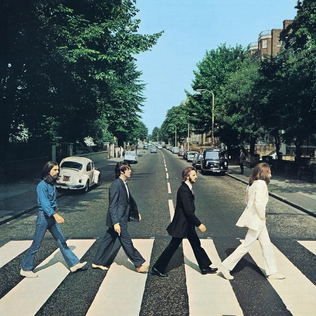
The way to the chapel, along Abbey Road (no, not that one) is a lovely walk and there were plenty of other people making it -- mostly locals from Knaresborough and the next village over, out enjoying a beautiful summer Sunday -- but it gave me some serious real estate envy. It's clear Knareborough is pretty prosperous and that it takes a lot of money to live along the river. The first clue? The Porsche parked outside of this cottage:
I don't need the Porsche (not pictured) -- just let me have the cottage, please. Or, even though it's not really my style, I'll take this home with the river-front dock:
I didn't get a picture of the following, but a number of the houses with fronts facing the road and backing up to the river had planters out front that were clearly made from reclaimed stone from the abbey. Some might have been troughs of some sort, but judging from the carvings, I'm pretty sure these were more coffins! But if so, where had the bodies gone?! Te-hee!
There's also a posh-looking little gentleman's farm, with these adorable heritage hogs and a marvelous wood pile outside of its wattle and daub walls:

And this to-die-for antiques and book shop:
Or this inn along the river, perfect for the English version of Lorelai Gilmore:
And, of course, there's the Chapel of Our Lady of the Crag itself -- which, by the way, is still used as a shrine to the Virgin Mary (even *more* remarkable in modern England, I'd say). I could never get a picture of the outside of it without someone in it -- not to mention the ugly plastic chairs -- so this will have to do:
As the historical records indicate, it was built by John the Mason in 1408, and as you can see, he gave it elements of a proper, full-sized church, including a glass window in the style of a stained-glass one (though not actually stained). Yes, I'll get to that weird knight figure in a minute, but first here's a picture of more of John's details, including the "vaulted ceiling" complete with "roof bosses":
And there's this marvelous little face. What is it?
There's an altar, too, in this 10-foot-square space. The statue on top of it is a later addition, the original presumably destroyed by the iconoclastic Parliamentarians iconoclasts of some sort:
Now back to that knight outside. Here's a closer look:
The brochure I bought says that there's no record of it being carved at the time John the Mason got the permit to carve the chapel, but then says there's no reason not to believe it's as old as the chapel. Really? My friend thought the face looked too "modern." I think the mustache looks more 19th century that medieval, but dating by style is a tricky thing. More important, the carving doesn't look worn away enough to be as old as the rest. Look at that weird little face again that I showed you above and how worn *it* is. Would the knight be as worn or even *more* worn, considering it's outside? And why would John the Mason carve a knight? What do you think?
Anyway, I really recommend a trip to Knaresborough -- especially in fine weather -- if you have the time, opportunity, and inclination. My only regret is that we didn't have time for the Hermitage of Robert of Knaresborough -- the three-year-old could only take so much -- but then again, I think the Lady of the Crag is more interesting, given that it's surviving evidence of the intensity of lay devotion.
And let me leave you with one last picture just for the heck of it (it didn't really fit into the narrative). Be sure to click on the picture to read the name of these "holiday cabins" and then marvel at how *wrong* that sounds!
Thursday, August 12, 2010
Why you should go to Knaresborough and see the Chapel of Our Lady of the Crag


Tuesday, June 9, 2009
Back from the UK with visions of food dancing my head
In past summers I've spent a lot of time in the UK, but this year I went there only for a week -- totally personal, too, not professional -- and I'm actually looking forward to a summer of reading, thinking, and writing in my own home. And in the next post, I'll have a research-related query for you all. But first, an update.
Bullock and I are just now back from our trip to the north of England where, as many of my Facebook friends already know, I attended a good friend's wedding in a borrowed dress and shoes (and no makeup, and unwashed hair!) because my luggage didn't get there in time. The fact that there was an attendee who lived locally and who had an extra dress in roughly my size was nothing short of miraculous. Otherwise, I might have gone to the wedding in the t-shirt and chinos I'd been wearing for about 36 hours straight. And not just any chinos, but coffee-stained chinos, the result of the flight attendant having spilled coffee all over me on the flight there. But it all worked out, and I actually liked the borrowed dress better than my own. England has many more cute dress options that the States, even in the English cities that are more or less the equivalent of Rust Belt City.
Speaking of which, I don't know why it took me so long to realize this, but much of the north of England -- especially Lancashire and Yorkshire -- have a lot in common with the upper Midwest. It's full of former industrial cities that hit hard times in the last few decades but are experiencing some renaissance now in the creative and cultural classes (think Chicago or Cleveland or even Pittsburg; and then Manchester and Leeds); the people are friendly, unsnobby, and hospitable; there are large Muslim populations in Dearborn, MI, and Bradford and Leeds; there's great Middle Eastern and Pakistani food to be had; and there is much beer drunk and much cheese eaten. No wonder I feel so much more at home in the north than in the south of England. Of course there are less savory similarities, too -- Yorkshire just elected a member of the British Nationalist Party to the European Parliament and Michigan is also frequently known as Militia-gan.
But one thing every city (and sometimes the towns and villages) in the north of England has that is missing in Rust Belt City is a slew of restaurants doing interesting and inventive things or just doing traditional dishes exceptionally well. The fact that the UK is having a cuisine renaissance is now practically common knowledge, and I've been noticing it and commenting on it for at least the last 10 years. In the north, especially, I've had amazingly good traditional, local food, often at small hotel restaurants and local pubs off the beaten tourist path. This trip I had tender, slips-off-the-bone-with-a-fork lamb at The Peasehill House Hotel Restaurant in Rawdon (a suburban village near the Leeds/Bradford airport); rich, tender duck confit salad at The Malt in Burley-in-Wharfedale (at the wedding reception); sweet and creamy mussels at Delrio's in York; mouth wateringly rich pork belly at the Hotel du Vin Bistro in York; and a lovely steak with a crunchy duck egg on top (the egg had been dropped into the fryer so that the whites fried up in the shape of wings, but the white stayed runny inside -- you wouldn't believe how good runny egg on steak is!) and a "trifle" of asparagus (a foam with crunchy peas in it) at J. Baker's Bistro Moderne in York.
But the best of all dinners was one I booked us for our last night. We were staying at the Crowne Plaza Manchester Airport (NOT recommended -- boo!) for our morning flight, so I did a bit of hunting on the internet to find an interesting and fine restaurant in the general vicinity. I finally decided on The Alderley at the the Alderley Edge Hotel in Cheshire, about 7 miles southeast of the airport, whose online menu suggested that they did interesting interpretations of traditional dishes, using mostly locally sourced ingredients. (If you're ever inclined to do the same -- though hopefully from one of the other airport hotels, NOT the icky Crowne Plaza -- I recommend taking the train from the Manchester Airport to Alderley Edge and walking through the posh and charming village to the restaurant, then taking a taxi back, since the trains stop running back to the airport at about 10 -- the taxi is about 15GBP and the restaurant will call it for you. We chickened out and taxied both ways, because we weren't sure what the walk from the station looked like, which really was a waste of money.)
Anyway, we were not disappointed. First of all, it was simply a lovely dining *experience*, the kind we can't get at all around here. Our coats were taken and we were first seated in the bar, where drink orders were taken and we were given a complimentary plate of amuse-bouche to go with the drinks. Then we were brought the menus, and the head waiter/maitre-d' (it was a small wait staff of three who shared tasks, but it clear who the top guy was) let us take our time as we hemmed and hawed over whether to go with the three course prix fixe menu, or a la carte, or go for the 6 course tasting menu. (There was little overlap between the three and it all looked SO good.) In the end we went a la carte because those were the dishes that excited us the most. (And here, I should say, if you go there and order what we did -- cocktails, inexpensive house bottle of wine, bottle of water, three courses each, plus coffee and petit fours -- it will cost you about 150GBP. It will cost more if you go off the house wine list (which is still quite nice, btw) -- that's where we cut a little cost because we not as much oenophiles as we are foodies. We knew we were splurging, but given the level of service and the wonderful food -- and given how much we like food -- it was worth it for us.)
And then once we'd ordered and we seated at our table, we had a leisurely dinner, perfectly paced by the attentive but unobstrusive staff, who had the rhythms of their restaurant down perfectly. And the food! Oh. My. God. The food! I really should've taken pictures, because it was all so beautiful on the plate, and just as rapture-inducing in the mouth. (You can see what I mean if you go to the website; you can also see the whole current menu there.) Just to give you an idea, for our entrees, I had the "Saddle of Roe Deer, Venison Hash, Poached Cherries, Pickled Sloe Gin" and Bullock had "Cheshire Spring Lamb, Three Ways with 'Shepherd's Pie,' Pickled Beetroot and Leeks." The "Shepherd's Pie" is in quotation marks for a reason -- not because of random quotation mark abuse -- because it was a miniature, almost bit-sized "pie" with a tiny little tart shell, a bite sized piece of lamb, and a dollop of mashed potato on top. (And then there were the other ways his lamb was prepared -- a lovely variety of miniature traditional lamb dishes.) And the pickled stuff was in the form of artfully sliced jellies that added color as well as taste to the plate. My plate, with its accompanying spring carrots and green onions looked liked modernist art, like a Mondrian done in triangles instead of squares and rectangles, but topped by the perfectly bite-sized array of oval slices of roe deer and the little ovals of the venison hash. And oh, was it good. The flavors seem kind of busy in my description -- so many things on a plate -- but it was all laid out so you could have a bit of saddle of deer with a cherry, or the hash with a bite of the sloe gin and a carrot.
I know for some people this might seem all too fussy, but I really appreciated the care, the craft, the art, and the thought in it all. I like the way it appeals to the eye as well as the nose and the tongue. I like the fact that it reminds me of other arts while I'm enjoying it. In fact, I think that's what characterizes this kind of cuisine -- it's food for thinking about as well as tasting. Or thinking about *while* tasting. And given the leisurely pace of the experience you have time to do that, to savor, to think, to discuss, to ruminate (well, hopefully not literally!). And I also like that with three courses, plus amuse-bouche and petit fours, I didn't feel horribly stuffed. I like the fact that I get to try all sorts of different flavors (and the appetizers and desserts were equally abundant in tastes) without over-eating. And alas, I still haven't found anything quite like this in and around Rust Belt City. There's an award-winning regional restaurant in the city 2 hours away from here that we like very much, but it requires an overnight stay, since a 4 hour round-trip drive is too much for one night. But this academic year Bullock and I have been quite spoiled with our trip to Paris and our trip to England, and now I fear we'll feel the lack of such restaurants even more. Sigh.
We also did all the touristy things one does in York and Leeds -- the Minster, the Yorkshire Museum, the Jorvik Viking Center, the Royal Armouries, etc., etc. -- and had a fun time at my friend E's easy-going, relaxed wedding and reception (once the dress issue was sorted out, anyway!). I also recommend the Hotel du Vin in York, if you can get a good discout rate. It was by far the most comfortable and modern hotel we stayed in (fantastic hurricane shower head! wonderful bed! and everything smells so good!), and it's only a 10 minute walk from the train station, as well as from Mickelgate Bar and the medieval part of the city.
Oh, and also, having learned about Eric Bloodaxe in all the York Viking-related museums, Bullock now wants to be known as Bloodaxe on the blog. But I thought that might be confusing for readers who pop in now and then. I suppose I could just attach the Viking nickname to the Western pseudonyn, like so: Bullock-Bloodaxe (with or without the hyphen). What do you think?
And yes, I will have some pictures, once I upload them from my memory card, and once Bullock gives me copies of his much better ones. I have a post brewing about one in particular. More later.
Tuesday, July 29, 2008
Castles and manuscripts and semi-automatic weapons, oh my!
I made it to Windsor today to look at an eight-line poem written in the fifteenth century in a blank space in an earlier manuscript. And though a small bit of text, it was a fruitful trip in many ways. Yay for successful fact-finding missions, however marginal they may at first glance seem. But my, what a process to get there! For eight lines!
To get where I was going at Windsor Castle, I didn't have to go through the usual tourist entrance, but instead was told to enter through the Henry VIII gate and ask the policeman there to direct me to the pass office. Easier said than done. I will spare you the detailed story about how just getting to Windsor was an adventure because I stupidly took the wrong Tube line and so missed the 08:23 train from Waterloo and got to Windsor a half hour later than intended (it involved the Northern Line -- I now loathe the Northern Line, for it is wicked), and skip to arriving at the Henry VIII gate to be faced with a kevlar-armored police commando holding a semi-automatic weapon across his chest. It's bad enough to enter through the Henry VIII gate -- will I be divorced? beheaded? or will I survive? -- but *you* try explaining to a heavily armed policeman that you're here to look at a medieval manuscript. It's rather intimidating!
Actually, he was very nice, as was his less armed partner, and they both directed me to a yet kindlier policeman inside a vestibule, who seemed to be the Copper with the Answers. It was a bit like a set of nesting dolls -- you had to get past the big imposing one, then the medium sized one, to get to the adorable one at the center. And the ones on guard in the afternoon were equally friendly: when I "surrendered" my pass, one made sure I wouldn't be coming back, and when I said yes, he said, "Well, our loss then!"
And once I was directed to the pass office and came back with my pass and showed my passport for ID (which the man with the gun had trouble with because apparently US ones have the picture in a different end than UK ones -- "trust you lot to be different," he said in a jovial way), everything went smoothly until I was confronted with a chain across the stairs leading to the archives. What with the heavily armed policemen around -- not to mention all the ceremonial swords on all the traditional guards -- and, I'm sure, CCTV covering every nook and cranny, I didn't really like the thought of ducking under it. So I went back to the kindliest of the three bears, er, policemen, the one with the Answers, and asked him, "Yo, dude, what up with the chain?" OK, not in so many words. Kindly police officer that he was, he left his post and walked back with me to figure out what was going on, and undid it for me, telling me it was just to keep the general public out. Awesome -- I'm not the general public! (Do you now have "Tenderness" [Link = YouTube clip] going through your head? Yeah, me too.) Later, when I was exiting that part of the castle, yet another chain was up across another space, but that time, knowing that I was not the mere general public, I very cavalierly undid the chain myself and walked out, as curious tourists wondered who I must be. OK, maybe they didn't care, but I thought I was pretty special.
It's not like I saw anything fabulous that tourists couldn't see from other vantage points, but I was in a part of the castle that's its own little world, separate from the tourists and State Rooms and changing of the guard and all that royal ceremony hoo-ha. In the Horseshoe Cloister, which I passed through to get to the Vicar's Undercroft, it seems there are living quarters, presumably for residential castle staff. I took a picture of the unusually curved building (hence the name "Horseshoe Cloister"), but as you may recall, I can't upload my pictures at the moment. It's a half-circle building in the style now called "Tudor" (only here it was obviously the real thing) -- brick on the bottom, beam and plaster on the top -- and has a continuous covered walk around its length over the entrances to all the residences (hence "cloister"). I know it was residential for two reasons: there were signs that said "Residents Only on Grass"; and as I left I caught a glimpse of the inside of one of them. They reminded me of the "rooms" (that is, apartments) that some Oxbridge dons have "in college." And beyond the Horseshoe Cloister, near the Vicar's residence and on the back side of St. George's Chapel, a whole little village seemed to open up. As I was leaving, a man and woman with a baby carriage were entering, presumably to go home.
In other words, I was in a living modern-medieval castle, bustling with life and activity on a grand scale, and not just because of the mad swarms of tourists. I know the traditional guards have horses somewhere, but here there were cars parked in reserved spaces in the Horseshoe Cloister and in the next court yard. The castle was guarded by modern versions of knights and infantry - some with swords, some with guns. The tourists were the courtiers and visiting statesmen, while the residents and staff and various and sundry went about their daily business, and I and the other "clerks" were busy doing things with manuscripts, and, in this case, microfiche, photocopies, Word texts, and PDFs, too. Meanwhile, the royal household was a presence without actually necessarily being present.
Plus ca change...
Post script: given all the fire power and other security (I had to apply for my pass in advance, presumably so they could look me up on watch lists and also see if I had a record), I was pretty surprised that there was no bag check. Nope, not one bit. In the *archives* I had to leave my bag in a vestibule inside their locked door (entrance by buzzer only), but no where outside of the archives was my bag a problem. After the archives, I even wandered around the tourist parts of the castle for awhile. (No one asked to see my entrance ticket -- there was 12 quid wasted on the discount ticket I bought with my train fare. D'oh!) I went in and around St. George's Chapel with my bag strapped to my back, and wandered around the middle and lower wards with it as well. Very strange.
Friday, May 23, 2008
RBOS: Random Bullets of Summer
- Hm. Random Bullets of Summer sounds like a gansta rap album title.
- Thanks to everyone who offered congratulations and huzzahs and woo-hoos in the last post. And Karl, that David Wallace as anonymous blogger joke never gets old with you, does it?
- I have made my summer UK travel plans. I will be at the NCS in Swansea -- I have trains and planes arranged -- then visiting a friend in Yorkshire for a few days, and perhaps catching up with a former student who will be completing her MA in Medieval Studies at York. And then I'll be in London from the evening of July 27 just through the 30th (I leave the morning of the 31st) to look at a couple of manuscripts at the BL, and maybe out at St. George's Chapel, Windsor, too.
- Get this: in order to get in to the library at St. George's Chapel, I have to pay for admission to Windsor Castle. Hm. I haven't been there since I was a kid -- maybe I'll do the touristy stuff, too, when I'm done with my manuscript.
- For those who want to know, you can book train tickets through TheTrainline.com only if you have a UK mailing address to post them to. They'll tell you you can't use a non-UK credit card, but I did. (They also claim you can't even register with a US address any more, and I seem to have done so. But then I remembered I already had an account from back in 2004, and logged in and purchased my tickets with that account.) The AmEx has been charged and my Yorkshire friend should be getting the tickets any day now.
- I decided to stay at The Euro Hotel in London, partly on Mike Drout's approval of it for what it is, and partly because it seemed to be the only cheap place available of the places really close to St. Pancras and the BL. I like the fact that it's on a little crescent street and it's relatively cheap for London -- 55 GBP for a single with shared shower and toilet (the online reviews say the showers are very close, clean, and never busy). I'll let you know what I think after I've stayed there -- or even *while* I'm there, as they have free wireless (another attraction).
- FYI, other hotels/B&Bs recommended by friends (but which either weren't available or didn't quite suit my desire to be able to drag my luggage myself from St. Pancras):
- The Ridgemount Hotel
- The Penn Club
- The Jesmond Hotel
- The Arran House Hotel
- The Goodenough Club (which is where I would stay if Bullock were coming with me and we were splitting the cost, since it's twice as much as the others).
- So I think I may fiddle with the blog design. It's summer -- I have time. JJC finds it too soothing after my old template's screaming orange. (Though was it really that screaming? I always thought of it as an autumnal '70s rust, and so went with a complementary color with the new design.) He also tsk-tsk'd the flowers at the bottom. OK, so it's a little genteel and froofy, but I love English gardens (the picture was taken in Cumbria). But he has a point. It's not very Virago-like. Any ideas?
- Pippi is also getting ready for summer. I took her to the groomer today. It's the first time since we've had her that I've handed her over to strangers and walked away. It was very traumatic for *me*. But for her? Nah. Her attitude was all "ooh! new people to love me! new scents! other doggies! let's go!" Sigh.
- So you know what I just realized now sucks about being tenured -- aside from more service work? Now I only do a dossier every five years, so I have to be super-organized and save all the proof of what I've been up to in research, teaching, and service for five long years. D'oh.
Wednesday, February 6, 2008
More pictures of Norwich
Just because I feel like it, here are some more pictures to go with the post below.
First, three views of the world's crookedest building (or so I think), across from one of the gates to the Cathedral grounds:


A Norman keep plus a nun walking a cute dog plus a sunny blue sky = a perfect moment in Norwich (where is everyone else on this perfect day??):
The market square with the guildhall in the background:
A close-up of one of the tents (check out the sign -- is it all wireless??):
Interior shots of the great hall at Stranger's Hall (kind of dark, I know):

Seen in window while standing in Stranger's Hall's garden (creepy!):
One of the many medieval parish churches, a stone's throw from the boundary of the Cathedral close (turn around and you'd see the Cathedral looming over you):
And finally, a view of the river across from where the Pastons once lived, complete with swans and one of many, many pubs in Norwich, The Mischief (on the right at the end of the bridge):
Sunday, February 3, 2008
Sticking up for Norwich
Since Karl ragged on the churches of Norwich in the comments to the last post, I feel obliged to stick up for them. First of all, for any of you late medievalists out there, or for those of you who like to visit English cities with lots of well-preserved medieval structures, Norwich is a must-see, especially as it has not yet been overrun by tourists the way York has (though York is also a must-see, tourist crowds or not). I visited Norwich on a sunny August day in 2004 and had a lot of places entirely to myself, including Stranger's Hall (granted, more early modern than medieval) and the reconstructed cell of Julian of Norwich (rather much larger than I imagine the original to have been). And if you happen to be in Cambridge, it's an easy train ride from there (about 2 hours, if I recall, and cheap day-returns are available). Also, I will always be fond of a city where I saw the Biggest. Dog. Ever. at the foot of one of the towers of the old medieval wall:
No, that's not a pony. It's a wolfhound of some variety, but I don't know which.
Anyway, back to the churches. I remember reading in one of the guide books that Norwich has the largest number of still-standing medieval parishes of any city in England. And then on top of that there are the rebuilt Victorian gothic churches, as well. The result is that you can stand in the yard of one parish and usually see one, two, or three more from where you're standing. It gives you a very clear, tangible sense of the closeness and smallness of medieval parishes, and of the religious activity that was necessary to sponsor their existence. In contrast, many parish churches in Norwich today are being made "redundant" -- despite existing in a country with a state religion.
I don't entirely disagree with Karl that the parish churches are all pretty small and dark, but they give a sense of intimacy (and the kind of close community that implies) that cathedrals and mega-churches and the suburban Catholic church I grew up in just can't do. But the Norwich churches really show you just how wealthy Norwich was in the 15th century. Take a look at St. Peter Mancroft, a parish church on the edge of the market square and near the guildhall, which probably means that its 15th century parishioners included many a wealthy merchant. Below is a picture I took of the interior, but I don't really do it justice. The home page of the church that I just linked gives more pictures, including one of the exterior that really shows its impressiveness, and you can see a panoramic view here, courtesy of the BBC. Here's my picture: Pretty impressive for a parish church. Apparently, many visitors mistake it for the cathedral. Speaking of which, Norwich Cathedral is a wonderful place to visit, too. Though it's not quite as lovely as York Minster, it does have a fabulous collection of painted ceiling bosses and misericord carvings in the choir stalls. Here are two half-way decent pictures I took of those elements (the bosses are from the cloisters where I could get close to them):

What I also enjoyed about the Cathedral, especially on such a lovely day, was its enormous, park-like close (the biggest in England, I think). Here's a view of the Cathedral from one of the lawns:
That's only a part of the close. It goes on forever and seems to have its very own little village inside it. I *so* want to live in one of these houses (*love* the crenelation on the pink one!):
Of course, given English real estate prices these days, I couldn't afford one, not even with Norwich's relatively more affordable real estate. So I'll have to content myself with maybe going back for a visit some day. I'd like to do some easy hiking through East Anglia (it's very flat, after all) and maybe pop in on Norwich to see the things I didn't get a chance to visit on my one day there -- for instance "Dragon Hall," a 15th century building and museum of late medieval mercantile life, was closed for renovation when I was there.
So there you go -- plenty of reasons to love and visit Norwich! Now, perhaps I should ask the Norwich Tourism Board for an honorarium or something! :)
PS - Two more reasons to visit:
1) Streets like these...
2) ...where the Pastons once lived:

(I was also going to show you a picture of the Norman fortress with a nun walking a cute dog in the foreground, but Blogger won't let me post another picture. Darn!)
Saturday, February 2, 2008
Illuminating York Minister with voices
This is so cool. Back in October and November, a group called Illuminating York did a series of art installations and performances all around the city of York, England. The first link takes you to pictures and video of Evoke, an interactive project that lit up the Minster's western facade with moving rainbow lights set to operate in response to people's voices. The pictures are great but the video is even cooler. In it, singers, screaming kids, clapping crowds, and the sound of children's feet on the steps to the entrance all send undulating light projections crawling up the face of the Minster. I love the fact that it makes tangible the idea of voices being sent into heaven through the magisterial, soaring heights of the Minster. And be sure to watch the video through to the end, where the lights change into something more eery and uncanny.
I have to say though, I don't get where the writer of the post is coming from in describing York Minster as "usually dark and gloomy." Maybe they just mean at night, because York has always struck me as the airiest and lightest of medieval cathedrals, owing in part to its light stone (is it limestone? I can't remember) and its late medieval architectural techniques allowing for greater height and more windows. It's so powerfully beautiful that my mother gasped when she first entered it back on our first trip there in 1986. Though never a fan of religious art -- though she always visited every cathedral in every European cathedral city we traveled to! -- even my atheist mother understood viscerally the potential effect of the place for someone who does believe. For her its beauty was powerful enough.
I imagine living in York it would be easy enough to take the Minster for granted, but a display like this reanimates but also repurposes its beauty and meaning. Illuminating York is illuminating in all senses of the word. Well done!
Wednesday, July 4, 2007
Pictures of pork


Because I haven't posted in awhile I thought I'd throw *something* out there for you so you know I'm still alive. I took these pictures above for Bullock because he's rather obsessed with pork in all its culinary varieties. (Yes, I know there are other meats in the display window. He likes those, too.) They're from a Yorkshire town called Otley.
Anyway, he responded that the place looked like where the English branch of the Sopranos would hang out. Te-hee.
Happy Independence Day!