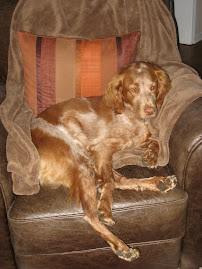
And here's where I've moved to!
OK, I thought a post with that title might be more obvious on the blogrolls of those of you who use those updating blogrolls that show the most recent post.
That is all.
Friday, August 5, 2011
I've moved!


Sunday, July 10, 2011
Time for a change!
You know what this blog needs to get re-started? A NEW LOCATION! Yup, I've just moved into my new digs at a fancy Wordpress blog. You can now find me here -- just replace the blogspot in this old URL with wordpress to get you there (and to update your blogrolls and RSS readers).
I thought now was a good time to move since I'm entering a new phase of my career, the amorphous "mid-career" stage. I'm not only post-tenure, but post-sabbatical (I'm not hopeful that we'll have them any more in another seven years), so it seemed like a good time to upgrade the blog a bit.
I've got a introductory post up at the new place now, and I've also moved all the archives over from here. And shortly, I really will re-commence substantive blogging. I've got a post brewing about an infuriating e-text issue and tons of pictures to show you and stuff to tell you about my research trip to London (where I was too crazily busy to find time to blog). So go check out the new place and give me some feedback there.
I've been doing all sorts of house-cleaning and moving in the electronic realm, actually. I've moved the blog from Blogger to Wordpress, started up a Google+ profile (which I really hope will ultimately take the place of Facebook), and switched up the way I do e-mail. Basically, I'm trying to move Dr. Virago's world away from Google products (although I still have a Gmail account under that name) so that I won't find myself accidentally commenting under my real name on blogs or sending an e-mail to a friend as Dr. Virago. Plus things are just prettier and sleeker over at the Wordpress blog -- go see!
Saturday, April 30, 2011
Sabbatical makes for boring blogging
Sorry for the radio silence lately, but there just hasn't been much to talk about, really. *However*, I'm leaving today for six weeks in England, so maybe I'll have more to tell you about from there. The flat I'm renting is in a celebrity-rich part of Belsize Park, so I'll be sure to tell you if I have any star sightings. :)
Friday, February 11, 2011
Who the heck is the audience for a "companion to" piece??
I have been tasked with writing a chapter for one of those "companion to" books, one with a *huge* charge: all of medieval British literature. So I'm writing a single chapter on a single very large genre (rather than, say, writing a more focused chapter for a guide to said genre). And worse, its word limit is 7500 words. (OK, that's 30 double-spaced typescript pages, but still, it's a big topic!) I'm feeling a little overwhelmed by the task before me.
But what most has me puzzled is just who I'm writing *for*. The style guide gives me some help, as it clearly privileges a synthesis of scholarly debates over an encyclopedia-like summary of the primary texts. But then it hilariously says it should be aimed at "undergraduates, graduate students, and scholars." Um, OK, then who the heck *isn't* it aimed at? (Well, a "general audience," I suppose -- but I kind of assumed that already.) And though it emphasizes scholarly debates over the primary texts, it also says I shouldn't assume too much detailed prior knowledge.
*headdesk*
Can my wise and witty readers help me out here? I've got some ideas, but I thought maybe I could spark some discussion about what is and isn't helpful in these guides and companions. In the case of my subject, I see non-specialists in it get all sorts of things wrong because they rely on out of date scholarship (i.e., what they learned in grad school or college years ago), and imho, no subfield of medieval literary studies has changed its mind so much about the basic facts as this particular subfield has. So beginning researchers are entering a minefield of bad sources. I think I should perhaps keep that in mind in my writing, perhaps even make that one of the shaping ideas of it. That would be helpful to anyone turning to it for a crash course in the subject. But I don't want it to sound like my "how to do research" class for first-year grad students; I don't want to talk down to people.
And on the other hand, one of the problems I have with many of these "companion to" essays is that they don't start at the beginning, that they do, in fact, assume too much knowledge, especially for undergrads and beginning grad students, so that reading one is no different than diving into any random point in the scholarship. And I don't want my chapter to be one of those, either.
Oy, what to do? Any thoughts? And if there are models of what you think makes the perfect "companion to" essay, lead me to it. Of course, different series do it differently, but even without those series, there's a lot of variety, so any model is useful. And if you were trying to bone up on a field, what would you find most helpful?
(Yeah, I'm being vague, I know. But hey, now this post applies to ALL the fields of literary studies!)
Tuesday, February 1, 2011
My super-awesome, brand-new early medieval lit course for the fall; or, something to be excited about!
OK, I should be doing research work now—I still haven't been as productive as I'd like to have been this sabbatical—but I'm excited about one of my fall classes and I wanted to tell you all about it, both in terms of its content (which the medievalists should be interested in and can give me feedback on) and in terms of its methods, objectives, and assessments, which just about anyone in literature or the humanities more generally might have something to say about. And can I just say that I'm glad I'm finally looking forward to teaching again? Some of you may remember a post from last semester in which I admitted I was burnt out as burnt out can be. It's amazing what time away plus a revamped course can do to get you excited again!
First of all, let me give you some background on the revamping. Here in the RBU English department, we have one undergraduate course on the books for the broad medieval period (which, btw, is "slashed," or combined with the lower-level MA course). We also have a Chaucer course. I can come up with other courses and offer them as special topics, but our students seem to be allergic to special topics, thinking they won't count for anything, even when they will—even when we say so in the course description. (Problem number one is that they don't always read the course description—the one written for that semester's particular version of the course—and if they read anything, they read the brief, vague catalog description.) Anyway, in previous years I treated the everything-but-Chaucer course as a kind of smorgasbord introduction to the entire medieval period, from the Anglo-Saxon period through the 15th century and even a little into the 16th (if we count the performance history of medieval drama). I used to put up a timeline on the first day to show them that we'd be speeding through more centuries of literature than all of their other English literature courses combined! It was enough to make my head spin, and I'm used to thinking across large swaths of time. In the very beginning, I tried to get some Irish and Welsh literature in there as well as Old English, Middle English, Anglo-Norman, and Latin literature, but the one time I did that, the class was an amorphous mess of "If it's Tuesday, this must be The Táin " kind of sampling. Bleh. So after awhile I started whittling down to the texts I most loved to teach or knew best. And for awhile that worked, but I knew that my students and I were both missing out on so much other good stuff, and I was starting to feel my brain atrophy. So, two years ago, with the encouragement of the undergraduate studies chair and the vote of the faculty, I changed the course description in the catalog to say that subsequent semesters would alternate between the earlier and later parts of the 8+ centuries of the medieval period, with some semesters offering thematically arranged topics across the whole period; it also directs students to consult the course description on the department website to find out the current topic. We also made it possible for students to repeat the course for credit if the specific topics are different (this is especially important for any MA students who are interested in the Middle Ages, but may also be true of some undergraduates).
So. Here we are approaching book-ordering and course description-writing time for next fall and I have to make good on my promise! This fall I'll be devoting the class to Anglo-Saxon, Norse, and Celtic (ASNaC) literatures, roughly those written or thought to have their origins before the full conquest of the Normans (for the Anglo-Saxon, Irish, and Welsh literatures) or from roughly the same period for the Old Norse literature—basically up to the 11th century for the Anglo-Saxon literature and up to the 12th and 13th centuries for the rest. There will, of course, be a little fudging, but the next time, I'll start with the Norman invasion in England and stick to the British Isles. And then after that, having taught a bigger range of texts, I'll know better what works for the students and what works together, and I'll come up with a thematically arranged class.
Of course, my more historically arranged courses aren't going to be without their themes, and one of the driving themes of this ASNaC course is the interlocking contact of these cultures. The Irish sent monks to England; the Vikings invaded England and Ireland; Wayland the smithy shows up in the both Old English and Old Norse contexts; shape-shifters appear in Norse and Celtic texts; the warrior-poet (or at least the articulate warrior) is a recurring figure across the cultures, and text after text brings the poet and/or the scribe into the narrative; the surviving texts are all written or written down by Christians but often draw on the pagan past even for explicitly Christian subjects; and so on. I know that it's really difficult to show or prove direct influence between the vernacular literatures in these cultures, but I want to create a general impression of a multi-cultural, multi-lingual, vibrant—even violent—state of flux for the insular and peninsular cultures of the North Sea in and around the British Isles. And so my syllabus isn't going to be arranged in any neat geographic or chronological way (which would be really hard to do, anyway, given how many questions there are about dates and places of origin for so many of these texts). I don't have it all sorted out yet, but on the first day I'll show images of three material objects—The Book of Kells, the Lindisfarne Gospels, and the Franks Casket (especially the Wayland/Magi side)—to stage the shared cultures and influences, and also to begin pointing out the blend or juxtaposition of pagan and Christian narratives and themes (well, in the Franks Casket, anyway). The next day I'm thinking of either doing "Widsith," "Deor," and the Eddic "Lay of Volund" (to continue the "Wayland is everywhere!" theme, and also to set up the poet-as-hero idea with the first two), or else jumping into The Táin (after all, the Celts were in Britain first!), and doing "Widsith," "Deor," and "The Lay of Volund" after Beowulf, which I'd do after The Táin (to contrast "epic" heroic tales from two cultures). At any rate, I'm definitely going to intersperse appropriately analogous Eddic poems throughout the reading of Old English and Old Norse texts, and I may assign Hrolf Kraki's Saga right after the Beowulf -"Widsith" sequence, to get all those references to Hrothgar together. Usually I teach Judith after Beowulf, since they are manuscript neighbors, after all, and because I like to teach Judith as a response to Beowulf—especially as a rather critical response to the heroic drinking culture—which complicates the whole "yeah, we're Christians, but we admire our pagan ancestors" idea. But Judith could be fruitfully put off until after Hrolf Kraki. And skipping to the end of my syllabus, I'm going to put the Welsh last just to honor the fact that they were the last to fall to the Normans among the Anglo-Saxons and Celts. Well, they'll be sort of last, because on the very last day of reading, I'm going to assign "Pangur Ban," which is an Irish poem (and one of the oldest poetic texts on the syllabus), but which uses a Welsh word ("pangur") in the name of the poem's eponymous cat. And I'll be assigning it in Seamus Heaney's translation in order to reinforce the continued and very present-day vibrancy of this very old body of literature. (I also think it's a great poem to end with right before final exams since it depicts the scholar at work.) But The Mabinogi and Taliesin will get pride of place just before "Pangur Ban," even though the Book of Taliesin and "The Tale of Taliesin" are later in their manuscript forms than the dates I've imposed above. Like I said, there will be fudging.
So that's roughly the content of the course. I've got the list of texts I want to do and some rough idea where they'll go in the syllabus, but I haven't worked out the finer details yet, and in order to do that, first I have to, ahem, *read* some of these texts. I've never read most of the Old Norse material (or only in excerpt or summary form), but thanks to my friends on Facebook, I got a lot of good suggestions for stuff to assign and I'm going to sort through it this summer as I prep the class. And I'm excited to read it, too, because, hey, new stuff! (Well, new to me.) But I'm just as excited about the shape of the rest of the class—its assignments and their conception—as I am about the content. So lemme tell you about that, too, K?
For the undergraduates, there are going to be five graded components: participation, which counts a variety of ways of "participating" (10%); 8 one-page response papers (40% - 5% each); 10 submitted discussion questions (10% - 1% each); a 6-8 page essay in which they analyze at least three different translations of a text (20%); and a final essay-exam (20%). In the past I've taken exams out of my course assignments and replaced them with more writing assignments, but I've decided to put an exam back into the equation in this class for a few reasons. First of all, since one of the overarching themes of the class is the connections between the bodies of literature we're reading (even if those connections are nothing more than thematic), I want assessment that emphasizes seeing and articulating those connections, analogies, and parallels. A final, cumulative exam does that better than discrete papers on individual texts. I'm also going to emphasize making connections in the ongoing short assignments—the response papers and the discussion questions—both of which will also serve to keep students engaged in the material. Between the response papers and the discussion questions, they'll have to have thought deeply about at least 18 different texts assigned in the course (because they won't be able to do a response paper and a discussion question on the same text), which will set them up well for the exam. Still, concentrated focus and sustained analysis of a text is important, too, and that's what the translation analysis paper is about. And the response papers are about close reading, so those assignments are related in their skills, as well. But the other reason why I decided on a final exam rather than a final paper is something Tenured Radical said (though I can't find the exact post now) about giving students different ways to succeed in a class. Some students get neurotic about papers; some get neurotic about exams. I'm hoping that the short and largely informal nature of the response papers will keep the paper-writing neuroses down to a minimum, plus students can write them quickly (like an exam) or fuss over them, if that's their wont. And then the exam will be there for those who do well under pressure.
Meanwhile, the way I've set up preparation for the exam—especially since there's only one and it's cumulative—should help the students feel really invested in it and in the content of the course, as well as prepared for it. I'm really excited about this bit, because it's the first time I've planned something like this. Instead of assigning any new texts to read in the last week, the students and I are going to use that time to collectively write the exam. Like the discussion questions (and to some extent, the response papers), this is planned to help students realize that in many way they make the course what it is and determine what they get out of it; what's more, in both cases, I hope they'll learn by doing, rather than by merely responding. But again, it's also about the content of the course, about making connections. So, on the penultimate day of class, students will be charged with coming to class having reviewed the semester's work (oh, and yes, I'm going to emphasize note-taking in this class) and being prepared to talk about the themes of the course and its texts. (I am partly inspired on this point by Jeffrey Cohen's "Myths of Britain" class and their final review session, which he blogged about here.) And here's where I go crazy: after that class, they'll be charged with coming back on the final day with three potential final exam questions they've written themselves, based on the list of themes we've generated together. And we'll use that last day of class to select and hone at least ten questions. They'll know that the three final exam questions will come from that list of ten which they have helped to write, but I get to choose the final three. Now, I'm going to let them know this—and everything above—from the very beginning of the semester. In many of my classes, I give out the complete packet of assignments on the first day of class, and I intend to do that here, too (and schedule time to talk about each one on subsequent days). And so they'll know from the beginning that they're going to be responsible for helping to create the exam, but also that I reserve the right to do it myself if I think they're slacking or trying to get away with something. And the discussion question assignment will help them learn what really generates essay-length discussion and what doesn't. The pedagogical goal here is to get them actively making connections, cataloging, and sorting ideas as we go and in summary at the end of the semester. That's what a final exam is traditionally supposed to get students to do, but I find my students often regard a final exam itself as an opaque and mysterious thing and don't know how to go about making the broader-stroke connections it asks. If they have a hand in making it themselves, perhaps it will become more transparent to them—and that's a lesson they can take to other classes, too.
That's the undergraduate side of things. The graduate student side is a little different. First of all, I don't expect many graduate students to take the course, but for those who do, they'll have to do the response papers and discussion questions, too, as well as participate, of course. But instead of the short translation analysis and final exam, they'll have a graduate-level research paper in three stages: preliminary abstract/research question; polished abstract and annotated bibliography; and final paper. And I intend to make them meet with me for one group session about how best to go about the research and for individual sessions as they tighten up their research plan. But in keeping with the meta-theme of making connections—as well as accounting for the fact that it's rare that I have graduate students who want to be medievalists (the last two years bringing a plethora of exceptions, but still being the exception)—I'm going to allow them to write on issues of reception and revival if they wish. So if they want to write on Taliesin in The Idylls of the King, or Heaney's "Irishing" of Beowulf, or neo-Norse paganism and American pop culture, or whatever, they can. It might be harder for me to help them do it, but I'll enjoy learning something from their work.
So there you have it: a fall class almost ready to go on February 1st! Can you tell I was procrastinating? So, what do you think?
Saturday, January 29, 2011
Goggies! (That's "doggies" in LOLDog)
I've been transporting more dogs on their way to foster and forever homes since I first posted about doing this. And today was a treat because I got to meet my first German Shorthaired Pointers (GSPs) in person. Someone on the NBRAN volunteer list forwarded a call for drivers for a "GSP Express" run for National GSP Rescue carrying two 2-year-old GSP females; since it was coming right through our area, I volunteered. And I fell in *love*. If it weren't for the fact that Bullock *really* doesn't want a second dog and we're not sure Pippi would be happy to have a dog friend, I'd be signing up to adopt a GSP right now. And Bullock was pretty charmed, too -- I took him along because these were young and rambunctious dogs, and I knew I wouldn't be able to drive and manage them at the same time.
Anyway, let me give you a sense of how lovable they were. Meet Blue (the black and white dog on the left) and Cora (the liver and white dog on the right), two of the sweetest love-bugs I've ever met:
They look a little scared here (and wouldn't you be in their situation?), and Cora kept a kind of curious and serious demeanor most of the time, but they were also eager to be petted and to give kisses in return, and they settled into the car almost immediately. Blue even rolled over for a belly rub as soon as she got in the car, and Cora rested her head on the back of my seat, next to my head, for most of the ride as she watched where we were going. Blue, meanwhile, rested her head on the console in between the seats -- all the better to get ear-scritches from Bullock. And they were hilariously bi-polar: in the car they were mellow and calm (Blue even slept soundly for half the ride), but out of the car during the exchanges from one driver to another, they were insane balls of excitement and energy. Blue tried to crawl over my back to get out of the car as I untethered their leashes from the seatbelts because getting out of the car was SO EXCITING she just couldn't wait! But both in and out they were full of kisses and doggy affection. Adorable! And just look at Cora's eyes and reddish-brown fur. Wouldn't she look great with Pippi? And apparently Blue's coloring is rare -- it's likely she comes from a true *German* GSP pedigree since black and white isn't yet recognized by the AKC as part of the breed standard. Or maybe she's part English Pointer (which does come in black and white). Eh, who cares -- she was a doll. It was hard to hand either of them over, and now they're already half way through the next state in their journey. Sigh.
Btw, GSPs also come in a roan variation, like Pippi, and a roan GSP is the star of that Toyota "squeaky toy" ad you may have seen. ("Roan" in this context means the colors are blended together -- so liver and white are blended on GSPs and the orange and white is blended on Pippi. An American Brittany can also be liver and white, whether roan or not.) This also give you an idea of the crazy energy of a GSP. If you have a dog, you might want to play this video when the dog isn't around. Or, play it and watch your dog possibly go nuts looking for the toy:
Anyway, before Cora and Blue, I did two more Brittany runs. I promise not to post about *every* run I do -- I'll generally stick to notable dogs. But since I could never get Toby, on that first run, to face the camera, I thought I'd give you the opposite now. Meet Silas, who wanted to know, "What's that thing you're pointing at me? Can I eat it?"
Silas was a sweet, older gentleman, and a good copilot, as you can see here:
And before Silas, there was sweet, adorable Julio, a 10-month-old who wanted nothing more than to cuddle in my lap and get belly rubs. Luckily once he was getting said belly rubs, he was pretty calm -- a bit like the effect of a snake charmer's music on a cobra -- and so I was able to drive one-handed and rub Julio's belly with another. And oh, he was so, so soft. I often say that petting Pippi, who is also very soft, is like petting a bunny, but Julio was even softer. So I guess petting him was like petting a *baby* bunny. Heavenly! Unfortunately, what I wasn't able to get from Julio was a picture, because I was driving him after dark. But here are the small photos from the adoption site:

But don't fall in love with him -- turns out his foster already has and is adopting him. Hooray for Julio!
And what would a dog post be without a bonus picture of Pippi for all of her internet fans? Here's one of Bullock's 1,000+ photos of her (no, I'm not exaggerating!), this one from last summer:
Thursday, January 27, 2011
Advice for a budding medievalist (in literary studies)
Yes, I'm still here. Holiday travels and events, plus getting back into the swing of organizing my unstructured time, took a toll on my blogging. Also, I was trying to decide what to write about next and dithering over it until I got an e-mail today asking me to give advice to a first year undergraduate student at another institution who's interested in medieval literature and in possibly pursuing graduate studies down the line. And I thought, "Wow, that would make a great blog post, especially since it's medieval in content and I haven't written a medieval-related post in awhile (which means that Jonathan Jarrett has probably taken me off of his blog roll or is about to!)."
So let me share a draft of what I might write to him when he writes to me (it was his professor who first contacted me on his behalf and the student hasn't gotten in touch with me) and see what you think. Please feel free to add to or argue with what I say. And since it's advice for a student at a very small college, where departments consist of 3-5 people and no classical languages are taught, perhaps in the comments we can also make suggestions for those students at bigger colleges and universities. (And note that in the letter I *gently* address the "whether you should go to graduate school at all" issue. He *is* only a freshling.) Also, if my tone is too condescending, please tell me! I'm not used to talking to first years about graduate school!
Edited to add: with some minor revisions, you could easily adapt this advice to apply to any English major. Do a few more revisions, and it could apply to any humanities major or any other liberal arts major. Feel free to use, adapt, and link!
So, here's what I might write:
Dear Stu,
I'm so glad your professor put you in touch with me. I'm happy to answer your questions and give you some general advice about what to do to pursue your interests in medieval literature now and in the future. You're already *way* ahead of the game by thinking about graduate school already as a first year student. I didn't realize that I wanted to pursue a Ph.D. until I was already out of college, and I felt like I spent the first couple of years in graduate school catching up with what I didn't know. So, in a way, the advice I'm giving you now is what I wish I had done myself as an undergraduate.
OK, first of all, you have three and a half years to explore: to find out what you love, what you're good at, and who you want to be. Don't be so focused on the goal of getting into graduate school to study medieval literature that you miss your chance to learn new things -- things you might not even yet know you'll love. You can get more advice like this about college in general and how to get most out of it from the book The Thinking Student's Guide to College: 75 Tips for Getting a Better Education by Andrew Roberts (University Chicago Press). Not all of his advice will apply to you, since the author works at a big research university (Northwestern) and bases a lot of advice on what resources students at such big places have. For example, he says not to take too many courses with any single professor, but there are only 5 professors in your English department, so that can't be helped. Also, he has an annoying habit of saying that most professors are more interested in their research than teaching. That's definitely not true at your college, which is committed to undergraduate teaching, and it's not even true of everyone at a research university like his. But most of his advice is excellent and equally applicable to you as it is to a Northwestern student.
But now, on to the more specific advice about your plans to pursue medieval literature. First of all, as an undergraduate, you shouldn't narrow yourself too much beyond the major, and your major is English literature, not only medieval literature. Make your goal being the best *English* major you can be and you'll actually be helping your chances of getting into a good graduate program. Admissions committees in Ph.D. programs don't want to see someone so focused so early that they seem unwilling to learn or incapable of making connections across a wider literary history. As professors we often have to teach outside of our specialties in surveys and introductory classes, so the better educated you are in English studies more broadly (including English literature, American literature, comparative and world literature, and rhetoric and composition), the more flexible a scholar and teacher you'll be. If your department offers a literary theory course, be sure to take that, as you'll need it in graduate school, and it will give you the tools to think with as you study and write about literature now. Start thinking of yourself now as one who studies and thinks about literature and how it works, and not just someone who reads lots of literature. And to do that really well, it helps to think about how language works, so if take a history of the English language course if it's offered. It also helps to have experience thinking about as many different genres and cultural and historical contexts as possible, so try to take a range of courses that teach you about as many periods and types of literature as possible, even ones you think you might not like. Even if you still want to be a medievalist, those other courses will help you think about how literature works, and therefore how medieval literature works, perhaps in contrast to how a novel or short story or modern play or contemporary poem works. Take the maximum credits you're allowed in your major department, but don't skimp on related fields: history, philosophy, art history, literature from other cultures and languages (more on languages in a minute), and theater (especially theater history). As you're doing all this, get to know your professors, not just in class, but out of class in their office hours and any department events. The more they know you, your work, and your goals, the better their letters of recommendation will be for you. At a small college like yours, it's really easy to know your professors and for them to know you -- take advantage of that opportunity.
And as you get further in your major, start doing research and reading criticism about the works you're writing about. Write research papers for as many classes as you can -- ones that don't just summarize what other critics have said, but that enter into conversations with them, argue with them, and get ideas from them (with all due credit, of course!). Ask your professors for advice on what to read, on how to do research (if there isn't a course on research methods), and on how to write in conversation with the criticism you find as you progress in the major. (I recommend the book They Say / I Say as a good guide to writing research papers, and librarians are *great* human resources for helping you learn to do the research.) If your college or the English department offers you the chance to write an honors thesis, take it. Graduate school and a large part of being a professor is about doing research and writing original scholarship about literature -- again, in conversation with other scholars -- so the earlier you learn to think that way and to read what others have written, the better jump you'll have on graduate school and being a scholar yourself. After all, one of the best ways to learn to do something is to imitate someone else doing it, and in reading and thinking about literary criticism, you can start using that criticism as models for your own writing.
While on your college's web site, I saw that your department offers a summer study-abroad trip to England with the professor who teaches medieval and early modern literature in English. If you can afford it, go on this trip. You get course credit and a great experience all in one, and there's nothing like being in the places you've only read about. Even if you've been to England before, being a student there is different from being a tourist, and includes opportunities you'll only really get as a student.
Now, there isn't time in four years to take every course ever offered, and you have other requirements and educational goals to meet, too (and you should aim to get that broad liberal arts education in the best sense -- don't skimp on the science and social science courses). So you should be choosy in some ways. Since you want to be a medievalist, choose courses in related fields most closely related to your interests. You'll still get the benefit of breadth, since you'll be learning how different disciplines have different goals and objects of study. If there aren't enough specifically medieval offerings in history, art history, philosophy, etc., take courses on the ancient Greek and Roman worlds (especially Roman) and on the European Renaissance. Or find out what was going on in Asia and North America while Europe was in the Middle Ages.
And take as much of a foreign language or two as you can. Be serious about learning the language beyond the required two years. Unfortunately, your college doesn't seem to offer Latin, so take French or German, or both. If you passed out of the language requirement, take another one anyway, or get better in the one you know. Most Ph.D. programs require proficiency in at least one foreign language, and sometimes two. For medievalists studying English literature, Latin, French, and German are the most useful, commonly-taught languages to know. There are intensive summer programs in Latin, if that's an option for you now (Google the phrase "intensive Latin summer courses"); you could also leave that for later, once you're in a graduate program.
And finally, start looking into graduate programs in your junior year. Most applications are due in December and January of the year before you plan to start. Of course, there's nothing wrong with taking time off from school -- I took three years -- but if you want to go straight from college, you'll really need to start getting applications ready over the summer and early fall of your senior year. While you're doing all this, talk to your professors, especially the more recent graduates of Ph.D. programs -- the ones with the title "Assistant Professor" -- and ask them about what graduate school is like, where they went, what being a professor is like (especially beyond the classroom), and how they got their jobs. I'll be honest: I don't recommend graduate school for everyone. But you're off to such an early start thinking about it, that if you start preparing now, even if you choose to go another route, you'll still have given yourself a great and enjoyable education. If by this time two years from now, in your junior year, you're still thinking about graduate school and no one has given you the "bad news" talk, get back in touch with me. And in the meantime, use the resources of your career center and learn about other career paths you might take. There are a lot of interesting careers out there you've never even heard of, as well as a lot of smart people in the world who love literature but who aren't professors and have fulfilling lives. It's good to have options.
And any time you want to ask me more advice -- especially about graduate programs for budding medievalists -- drop me a line. Best of luck and keep in touch!
Subscribe to:
Posts (Atom)