Showing posts with label travel. Show all posts

Sunday, December 19, 2010

RBOC - Gray winter day edition

Blogging bullets:

  • You may have noticed that I have no blog roll. That's because it was a Blogrolling blog roll, and Blogrolling has ceased to exist. That's a shame, because it was a handy system (though the ads on it in the last year or so of its existence were annoying). But I cut and pasted the blogroll before that happened, and when I get the energy for it, I'll repost an updated version of it.
  • I'm thinking of changing to WordPress. Those of you who've made the move, how hard is it to move the archive of the blog? What do you like/dislike about each platform?
  • I'm also thinking of claiming my blog as service/outreach when I do my 5 year post-tenure review or when I go up for full professor. Any opinions about that?
  • My partner has been known as Bullock on this blog because I named him in our Deadwood-watching phase, during which time he grew a Seth Bullock-style mustache and goatee. But Deadwood is long gone and my man is clean-shaven. Plus, even though "bullock" meant "young bull" in Middle English and that's one of its meanings today, it also can mean a castrated bull, which is not the association I wish to project for my Bullock. (Though it is kind of a funny pairing with Virago.) But it would be confusing to rename him. I'm thinking maybe of just putting a "cast of characters" in the sidebar and explaining the origins of the name. Any other ideas?
  • I have been remiss in telling Pastry Pirate fans that she has long been blogging elsewhere. First she was in New Zealand, working and exploring, and now she's working in Antarctica. No, really. I kind of think "Baking in Antarctica" should be the title of the blog, but since it started before her life on the Ice Planet Hoth (as I like to think of it), it's called Stories That Are True.
  • Hey, cool, I managed to blog more than in 2009. Not exactly an awesome accomplishment, since I was really lame in 2009, but still an improvement. What should I blog about next?
Work/Life bullets:
  • Our Christmas tree is up, all the Christmas shopping is done, and all but one present is wrapped (because it hasn't arrived yet)! Hooray!
  • On Thursday, I wired the deposit for the studio flat in Belsize Park. It's non-refundable, so this makes it official. I'm going to be living, however temporarily, in a flat in London! I've never lived in a flat in London before! Heck, I've never lived in a flat before (American apartments, yes). How cool is that?!
  • The one-week rent for the studio flat in Belsize Park (the amount of the deposit) is just over my one-month rent in my awesome two-bedroom Rust Belt Historical District apartment and only about $175 less than our monthly mortgage payment. I'll never be able to live full-time in a big, expensive city again -- I've been too spoiled by the low cost of living here in Rust Belt. But hey, now I can afford 6-week jaunts there! So, I may live in Rust Belt, but I can better afford life in the big city in small doses. This is what I keep telling myself, anyway.
  • OMG, my sabbatical is half over!!! Ack!!!
  • Something I realized at the various holiday parties this week: asking me "So, how's sabbatical going?" is as crazy-making for me now as "So, how's the dissertation coming?" was for me once upon a time. Also, faculty on sabbatical don't want to talk about work issues. Come on, people, surely we can talk about something else!
  • Bullock is grading finals. He just said to me, "It must be Christmas time, because a student just spelled Commerce Clause like Santa Claus."
  • Bullock and I are going to BullockLand for the holidays (with Pippi). I spent Turkey Week in Cowtown with my side of the family and starting this year we're alternating where we go for Christmas so that we don't have to do the crazy-making hurryhurryhurry to get to one place and then the next. That makes my going out to LA to visit Virgo Sis and go to the MLA much less stressful (so does going to MLA just to go). Of course, so does being on sabbatical, because otherwise I'd be doing MLA back-to-back with starting our Spring semester.
  • Speaking of holiday plans, in case I don't blog again before we leave:

Saturday, September 4, 2010

On relics, medieval and modern, sacred and secular

Sorry for the silence, especially given that I'd promised to get back to blogging more regularly. Blame "LeechBlock," a plug-in for Firefox. It lets you bar yourself from certain websites during times you set, and I set it to bar me from Blogger (among other things) from 9-5, M-F, to help me focus on my work. And I haven't been getting up early enough to start the day with a post, and by the end of the day I need to get away from the computer because my back is killing me. I need to be at the computer during the day because I'm working on a editing project that is due very, very soon, but unfortunately, I tweaked my back a couple of weeks ago, so that sitting has been uncomfortable -- so you can understand why I don't want to do it for long.

Anywho, that has nothing to do with the subject of this post, which is all about relics, because this summer I got to see -- and even hold (sort of) -- my very first relics (one of them right here in Rust Belt State, no less!). Perhaps you find that surprising, given that I'm a medievalist and grew up Catholic, but I think there are some reasons for the belatedness of my encounters with relics. (And also, as the post title suggests, one of these "relics" is neither Catholic nor medieval. But I'll get to that.) First of all, the Catholic subculture I grew up in -- midwestern, suburban, largely well-off -- was kind of trying to pass as WASP, I swear. I have another post in mind in which I might try to explain that more, but you'll have to take that as a given now. At any rate, I don't think I even *learned* about relics until I was studying medieval literature, or if I did, the Catholics who taught me scoffed at them. And though I've seen many, many reliquaries in museums, it's not often that the relic is still in it (or if it is, it's not visible). This especially true in the US and the UK, for obvious historical reasons.

I must have felt this lack on some unconscious level -- how can I call myself a real medievalist if I haven't seen a relic?! -- and managed to turn this summer's travels into "Dr. Virago and the Quest for Relics." OK, that's not *all* I was doing, but I did consciously seek out three encounters with relics, and then accidentally encountered another one in a museum closer to home. The last one, the one in the museum, was one of the few rare visible relics in a museum-owned reliquary; it's the least exciting one, especially since it was the last of the relics I saw this summer, but I thought it was kind of serendipitous and funny that all this time I could have seen a relic in my own backyard. The overseas ones were the ones I actually sought out.

The first one was the hand bone of St. Etheldreda in St. Etheldreda's church in Ely Place in London (just off of Holborn Circus and next to Charterhouse St). My quest to visit St. Etheldreda's started when I purchased a book called Secret London (or was it Hidden London?? I don't have it to hand now) on my first day in London this summer -- to kill time at Waterstone's on Malet St. while waiting for my room at College Hall to be available. Both St. Etheldreda's and its neighbor, Ye Old Mitre pub, were in the book, and since they weren't far from Malet St., I decided I wanted to pay a visit to each -- the pub because it looked adorable and the church because, OMG!, a relic you can see! of a pretty cool Anglo-Saxon saint whose Life by Aelfric I've used in Old English and so know something about.

I went to the pub first with my friend Mark on a pub crawl that also featured the Princess Louise, the Cittie of York, and Blackfriars, all of which I recommend. But I'll have to do a separate post on those, especially so I can post pictures of Blackfriars, which is an *extraordinary* Art Nouveau extravaganza, and of the Mitre, which really *was* freakin' adorable (although its history is tied up with Reformation and the Bishops of Ely in kind of a nasty way -- at least according to history of St. Etheldreda's on their web site). And so when I was looking for something to do with my friend C. and we decided on another pub crawl, I talked her into starting at the Mitre, but only after we paid a visit to St. Etheldreda's first.

St. Etheldreda's was cool and fascinating not just because of the relic. Since the late 19th century, it's been back in the hands of Catholic church, so there were stained glass windows and statues commemorating Catholic matyrs to the Reformation who were all associated with the church or its nearby neighborhood, including Carthusian monks from the monastery up the street on Charterhouse St. The Carthusians were commemorated in the stained glass window made in 1964, and scenes of their execution lined up with scenes of the Passion. Yeah, not subtle. But it's pretty extraordinary to see such religious propaganda in England on the *Catholic* side of things. And while it must not have riled people up in 1964 in England, imagine such a thing being installed in Northern Ireland at the same time (or a decade later!). It's weird to think about the history *and* the present of religious strife in England and its dominions and to look at that window in peace in a quiet church on a placid little street in London today. You can see the window itself, as well as the statues commemorating other martyrs, here.

But back to the relic. The guide book said it was kept in the sacristy and if we asked nicely, we'd be able to see it. So, we asked nicely. And the man (lay caretaker?? he wasn't a priest) who we asked cheerfully marched up to the altar and the sacristy, opened the decorated coffin the relic is kept in (which I actually didn't see from my vantage, but you can see it here), brought over the reliquary, and *handed* it to us! OMG! I'm *touching* a relic -- weird! (To this day I keep thinking I could have turned to C. and said, "Run!" and we could have disappeared forever with the relic of St. Etheldreda. Not that either of us would have *really* done that, but it amuses me to think it.) And actually, we weren't really touching the relic itself -- just the surprisingly heavy reliquary, which was hand-shaped and had a little window through which you could see the bone. The web site says it's an "incorrupt" part of her hand, but it looked like a bone to us. And it had a bright red spot painted on it -- anyone know what that's about?

So that was my first relic, and being the kind of person fascinated with the macabre, I was fascinated with it, even though, in retrospect, it wasn't all that exciting. No, there was a *much* more exciting set of relics awaiting me at the Basilica San Domenico in Siena, Italy: the finger and *head* of St. Catherine of Siena. I have C. to thank for this, too, because she saw them first and told me I had to see them because they totally topped St. Etheldreda. And boy, was she right!

You can't take pictures of St. Catherine's head, and my measly camera wouldn't have been able to handle it anyway, because you can't get very close -- the chapel is roped off. (You can get much closer to the finger -- at which I stared for a considerable time -- but again, no pictures.) But luckily, there are images out there on the web that I can borrow. OK, prepare yourself to be a little grossed out.

Are you ready? It's pretty grotesque, so I thought I'd warn you before you scroll down.
*
*
*
*
*
*
Here it comes, St. Catherine's head:


Now *that's* an incorrupt relic! (OK, it's partially corrupted, but it qualifies for incorrupt status.) Weird, huh? I was kind of creeped out and utterly fascinated at the same time. It was like rubbernecking at an accident. Standing and contemplating all of this, I had one of these moments where I thought, alternately, "What kind of weird freak-show religion did I grow up in?????" and also "Wait, *am* I Catholic? This is totally weird and alienating to me." It was one thing to hold a reliquary with a bone in it and think, "Hm, interesting!" and another to look at this and be kind of dumbfounded, as I was.

But you know what? It's not just medieval Christians and modern Catholics who preserve and display the dead among the living...and that brings me to the modern, secular "relic" I also paid a little "pilgrimage" to, back in London, and this was also thanks to that quirky guide book and my residence in Bloomsbury in a UCL dorm this summer. Have you guessed yet what modern, secular relic I visited?

That's right, Jeremy Bentham! Here's good old JB, with his wax head, this time in pictures I took myself:


And lest you think Jeremy's presentation is much more decorous than Catherine's, let me remind you that underneath those clothes stuffed with straw is JB's skeleton. And those are his clothes and accouterments. And once upon a time, JB's preserved head was also on display -- between his feet! -- as you can see in this picture from the nearby display [WARNING! Another grotesque human head coming!]:


(Sorry about the blurriness -- because of the glass case, I couldn't use flash. But perhaps some of you are grateful you can't see that mummified head clearly!)

Bentham called this little display, which he arranged himself before his death in his will, his "auto-icon," so he had to be thinking of the religious valences of the word "icon." And sure, given that it's Bentham the Utilitarian we're talking about, he was probably *playing* with that notion and had no intention of being actually venerated. But still, the little display that University College London has erected around him -- not to mention the UCL Bentham Project as a whole -- isn't all that different in its curatorship and its tone of appreciation from the display of Catherine's head and the San Domenico web site. The Dominicans and UCL may be fans of, respectively, Catherine and Jeremy for different reasons, and Bentham's fans don't expect him to intercede in the spiritual realm for the them, but they're fans nevertheless.

The other thing that unites Catherine and Jeremy -- besides the division of their heads from their bodies! -- is that both heads have been the object of theft. Catherine's head was originally secretly brought to Siena from Rome, where the rest of her body lies, and it's now under such tight lock and key because of subsequent attempts to steal it. And JB's head is no longer on display because of an infamous theft of it by King's College London students in the 1970s. What is it about mummified heads that make people want to steal them?!?!

And I think underlying both the religious relics and the secular one are our complicated relations to death and (im)mortality. The two heads, especially, seem to want to keep the memory of and admiration for these two figure alive, to show the ways they conquered death, whether spiritually or intellectually, but they also announce our universal mortality, and in that way serve also as memento mori. Catherine and Jeremy likely had very different attitudes towards the meaning of that mortality, but they couldn't escape it, and they each seemed consciously attentive towards that -- Catherine refusing to eat anything but the Eucharist at the end of her life and JB writing his will with instructions about his "auto-icon."

And it's probably my own obsessions with/fears of death that has me so simultaneously fascinated and repulsed by these relics.

Thursday, August 12, 2010

Why you should go to Knaresborough and see the Chapel of Our Lady of the Crag

While I was in England this summer, I took a weekend to see my good friend E. in the Leeds area. She asked me what I wanted to do and I said, "Let's go to that adorable town, Knaresborough, that I keep seeing from the train on the way to York." (Note: that's on the line to and from Ilkley, which is the line my friend is on, so I've ridden that route a couple of times before or after visiting her and also going to York for various reasons.) And she said she hadn't been there since she was a kid and would love to go back, so go we did. And it turned out to be the *perfect* place to have a picnic lunch and spend an intermittently sunny and pleasant English Sunday with a friend and her three-year-old little girl, as well as a place of interest to medievalists in the area temporarily or permanently (I'm looking at you, TO'D!), as well as anyone else who's looking to do something in Yorkshire and has visited all the usual suspects.

First of all, you might be wondering what it was I could see from the train that so delighted me. Well, first of all, let me give you a view of where the train passes through. The following picture is one I stitched together from three or four other photos and is taken from the edge of the castle and its gardens high on the cliff side (click to "embiggen," and it won't look so fuzzy, though you will still see where I stitched it together):
So, you're traveling through the rolling hills and flatter fields of West Yorkshire when all of sudden you're on this lovely 19th century bridge (which is better appreciated here than on the bridge, of course) with a town opening up not only in front of you, but above and below you, too. (Btw, in the big version, if you look closely on the horizon on the left, you'll see the house that I will someday make mine. If I win the lottery, that is.) Here are some more pictures of the part of the town on the terraced cliff side and below, including one when the sun was brighter, and one of "The Old Mill House" (now a private residence):


Now, the center of town and its high street is actually on the plain above the river. I should've taken more pictures, because it's pretty exceptionally cute, even by cute English town standards. But here's a picture of the statue honoring the Historical Town Character, Blind Jack, who was a surveyor, bridgebuilder, and roadmaker despite being blind -- hence his surveyor's wheel in the statue:


His *actual* surveyor's wheel is in the town museum, the Courthouse Museum (on the castle grounds), which is actually quite a good local history museum if you can ignore the god-awful misinformation about the Middle Ages in the kid's hands-on exhibit (though there are fun costumes to try on!). The stuff about the Middle Ages in the *actual* museum, where the old stuff is -- at least what I saw in the limited time before the three-year-old got impatient -- was quite good. I wonder if part of what made it interesting both to me and to the town that keeps it up was that this seemingly little, out of the way town often played a part in national history, especially in the Medieval and Early Modern periods. (Here's the Wikipedia overview, but you can read more about the castle and its history here at Knaresborough Online.)

I don't have a whole lot of pictures of the castle because there's not a lot of it left. It's been reduced to little more than Romantic-lite garden ornament, having been ordered destroyed by Parliament in 1646 (*shakes fist*)--though the tower was kept intact as a prison, and another part used as a courthouse (hence the Courthouse Museum). Here's what's left of the East gate:

And here's a bit of the castle proper:


There's enough left that you can climb up part of it (where I took the above picture) and climb down into the "dungeon" (uh, it's just the undercroft), but it's not so challenging that our three-year-old companion couldn't do it. There was some more silly signage in the castle, including one about what was obviously a medieval-era coffin (which looked like the one on this site) that said something like, "This could be a coffin -- it's shaped like a body -- but if it is, where has the body gone?!" Um, to the charnel house so they could reuse the stone? That's one possibility, anyway. But hey, the views are lovely, and the garden/park that the castle grounds have been turned into included a mini-golf/pitch-and-putt area, and who doesn't love mini-golf?! And when we were leaving at the end of the day, a brass band was giving a concert in front of the tower -- lovely!

But the highlight of *my* day, anyway, was the visit to the Chapel of Our Lady of the Crag, including the walk there. It's a *fantastic* surviving example of late medieval lay devotion and its survival, especially given it's a Marian shrine, is all the more surprising given the destruction of the Trinitarian Friars' abbey down the road during and subsequent to the dissolution.

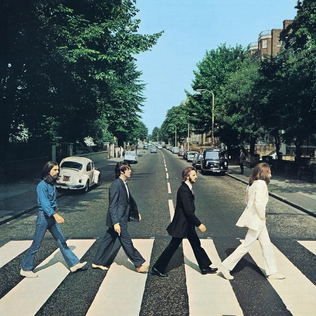
The way to the chapel, along Abbey Road (no, not that one) is a lovely walk and there were plenty of other people making it -- mostly locals from Knaresborough and the next village over, out enjoying a beautiful summer Sunday -- but it gave me some serious real estate envy. It's clear Knareborough is pretty prosperous and that it takes a lot of money to live along the river. The first clue? The Porsche parked outside of this cottage:


I don't need the Porsche (not pictured) -- just let me have the cottage, please. Or, even though it's not really my style, I'll take this home with the river-front dock:


I didn't get a picture of the following, but a number of the houses with fronts facing the road and backing up to the river had planters out front that were clearly made from reclaimed stone from the abbey. Some might have been troughs of some sort, but judging from the carvings, I'm pretty sure these were more coffins! But if so, where had the bodies gone?! Te-hee!

There's also a posh-looking little gentleman's farm, with these adorable heritage hogs and a marvelous wood pile outside of its wattle and daub walls:


And this to-die-for antiques and book shop:


Or this inn along the river, perfect for the English version of Lorelai Gilmore:


And, of course, there's the Chapel of Our Lady of the Crag itself -- which, by the way, is still used as a shrine to the Virgin Mary (even *more* remarkable in modern England, I'd say). I could never get a picture of the outside of it without someone in it -- not to mention the ugly plastic chairs -- so this will have to do:


As the historical records indicate, it was built by John the Mason in 1408, and as you can see, he gave it elements of a proper, full-sized church, including a glass window in the style of a stained-glass one (though not actually stained). Yes, I'll get to that weird knight figure in a minute, but first here's a picture of more of John's details, including the "vaulted ceiling" complete with "roof bosses":


And there's this marvelous little face. What is it?


There's an altar, too, in this 10-foot-square space. The statue on top of it is a later addition, the original presumably destroyed by the iconoclastic Parliamentarians iconoclasts of some sort:


Now back to that knight outside. Here's a closer look:


The brochure I bought says that there's no record of it being carved at the time John the Mason got the permit to carve the chapel, but then says there's no reason not to believe it's as old as the chapel. Really? My friend thought the face looked too "modern." I think the mustache looks more 19th century that medieval, but dating by style is a tricky thing. More important, the carving doesn't look worn away enough to be as old as the rest. Look at that weird little face again that I showed you above and how worn *it* is. Would the knight be as worn or even *more* worn, considering it's outside? And why would John the Mason carve a knight? What do you think?

Anyway, I really recommend a trip to Knaresborough -- especially in fine weather -- if you have the time, opportunity, and inclination. My only regret is that we didn't have time for the Hermitage of Robert of Knaresborough -- the three-year-old could only take so much -- but then again, I think the Lady of the Crag is more interesting, given that it's surviving evidence of the intensity of lay devotion.

And let me leave you with one last picture just for the heck of it (it didn't really fit into the narrative). Be sure to click on the picture to read the name of these "holiday cabins" and then marvel at how *wrong* that sounds!

Saturday, August 7, 2010

Jane Eyre returns to Thornfield and finds it *not* a burning wreck

So in the last post I mentioned that I was returning to the place where I once spent "The Summer I Was a Governess." I have *many* stories to tell from that summer -- though my only friend from those days (how sad and melancholy -- *one* friend -- it's true!) thinks I should save them for a Nanny Diaries type novel. Suffice it to say for now that I was tricked into being a much-abused and exploited live-in babysitter, with responsibilities almost every day, all day, for a mere $15 a week, and that many of the other kids didn't seem interested in being friends with "the help." (Except for that one kind soul, who was the reason I returned to the place this week.)

*Anyway*, for the first time in 26 years, I went back to the sight of my indentured servitude, and I have to say that it was *great fun* being there as an adult with no children to look after! First of all, it's a *beautiful* place. It was originally a retreat for a particular denomination of Protestant ministers and their families -- not quite a Chautauqua, but related, I suppose -- founded in 1901. And like many other places inspired by American Romanticism and the urge to get back to nature, it's a bucolic and relaxing place, on a spit of land between one of the Great Lakes and a very large interior lake with the most crystalline water you've ever seen. Look! --


That water is up to the hem on my shorts (which are fairly short shorts), and I have long legs. And as you can see, it's a sand-bottom lake, too, so there's an actual sandy beach to lie on when you're not in the water. Here's a picture of part of the sandy beach with everyone's beach chairs and water toys just sitting around waiting for them to come back for them (because you can do that there and your stuff will actually be there waiting for you!):


People who live at this summer resort live in "cottages" of various styles. Some are very traditional, like this one --


-- and some are traditional ones expanded upon and made more awesome, like this one (*love* the tree through the roof line of the porch!):


And then there's the fancy excess-of-the-80s might-as-well-be-a-full-time-house I lived in with the family I worked for:


Yeah, I know, poor me. But I'm telling you, I really did get a raw deal. (Though I did like "laying out" -- as we used to say -- on the deck on the back when I was home alone with the infant.)

By the way, I wouldn't have been back at this place again if I weren't still friends with the one kid I really befriended up there 26 years ago. In the intervening years we kept in touch almost entirely by writing -- first hand-written letters, later e-mails, and now Facebook. We didn't see each other again until 2004, here in Rust Belt. And then Bullock and I went to a wedding in my friend's current vicinity and we saw him then. And then I saw him this week. Amazing, isn't it?

Anyway, this time around I made a quick, 24-hour visit (plus the 5 hours of driving on each end) and did some of my favorite things to do in a place like this (short of swimming, since I currently don't own a bathing suit that fits). Here's a quick photo essay of my visit.

I relaxed on the cottage deck with a regional and seasonal beer:


I walked along the shore of the Great Lake with my friend, looking for interesting rocks:


I took pictures of interesting rocks:


I enjoyed the sunset over the Great Lake:


I relaxed in front of a bonfire on the shore of the Great Lake:


And I marveled some more at the clarity and calmness of the non-Great lake:


Oh yeah, and I slept *great* in the quiet and pitch-black dark of the woods.

All it took was 24 hours of awesome laziness to wipe out the summer of '84. I'm now in love with the place and talking to Bullock about renting a place up there for two weeks next summer!

ETA: I should also add that all the people whom I met (or met again) who have been going to this summer spot since 1984 or before were *thrilled* to see me there again, and were warm and welcoming to me as an adult. I'm sure being 15 years old had something to do with my feeling like such an outsider back then.

Saturday, July 31, 2010

Brief vacation

I will write those promised posts (I promise again), but Bullock and I are leaving for four days to visit his mother for her 70th birthday. I'm looking forward to seeing her and wishing her happy birthday, but I'm not looking forward to the fact that it's supposed to be stormy weather on the drive there and possibly raining the four days we're there. Pippi is NOT going to enjoy the car right through a storm! (Yes, Pippi is going with us.) We'll see just how bad her storm madness gets in a moving vehicle.

Then after we get back, I'm taking another brief trip to the Land of the Summer When I Was a Governess. I can't recall if I've ever mentioned that traumatic summer of my life (I wasn't really a governess, but I *was* an exploited live-in babysitter), but I'm sure I'll have something to say about visiting that place as an adult 26 years later.

Anyway, back to blogging when I return from these adventures in the Midwest!

Tuesday, June 9, 2009

Back from the UK with visions of food dancing my head

In past summers I've spent a lot of time in the UK, but this year I went there only for a week -- totally personal, too, not professional -- and I'm actually looking forward to a summer of reading, thinking, and writing in my own home. And in the next post, I'll have a research-related query for you all. But first, an update.

Bullock and I are just now back from our trip to the north of England where, as many of my Facebook friends already know, I attended a good friend's wedding in a borrowed dress and shoes (and no makeup, and unwashed hair!) because my luggage didn't get there in time. The fact that there was an attendee who lived locally and who had an extra dress in roughly my size was nothing short of miraculous. Otherwise, I might have gone to the wedding in the t-shirt and chinos I'd been wearing for about 36 hours straight. And not just any chinos, but coffee-stained chinos, the result of the flight attendant having spilled coffee all over me on the flight there. But it all worked out, and I actually liked the borrowed dress better than my own. England has many more cute dress options that the States, even in the English cities that are more or less the equivalent of Rust Belt City.

Speaking of which, I don't know why it took me so long to realize this, but much of the north of England -- especially Lancashire and Yorkshire -- have a lot in common with the upper Midwest. It's full of former industrial cities that hit hard times in the last few decades but are experiencing some renaissance now in the creative and cultural classes (think Chicago or Cleveland or even Pittsburg; and then Manchester and Leeds); the people are friendly, unsnobby, and hospitable; there are large Muslim populations in Dearborn, MI, and Bradford and Leeds; there's great Middle Eastern and Pakistani food to be had; and there is much beer drunk and much cheese eaten. No wonder I feel so much more at home in the north than in the south of England. Of course there are less savory similarities, too -- Yorkshire just elected a member of the British Nationalist Party to the European Parliament and Michigan is also frequently known as Militia-gan.

But one thing every city (and sometimes the towns and villages) in the north of England has that is missing in Rust Belt City is a slew of restaurants doing interesting and inventive things or just doing traditional dishes exceptionally well. The fact that the UK is having a cuisine renaissance is now practically common knowledge, and I've been noticing it and commenting on it for at least the last 10 years. In the north, especially, I've had amazingly good traditional, local food, often at small hotel restaurants and local pubs off the beaten tourist path. This trip I had tender, slips-off-the-bone-with-a-fork lamb at The Peasehill House Hotel Restaurant in Rawdon (a suburban village near the Leeds/Bradford airport); rich, tender duck confit salad at The Malt in Burley-in-Wharfedale (at the wedding reception); sweet and creamy mussels at Delrio's in York; mouth wateringly rich pork belly at the Hotel du Vin Bistro in York; and a lovely steak with a crunchy duck egg on top (the egg had been dropped into the fryer so that the whites fried up in the shape of wings, but the white stayed runny inside -- you wouldn't believe how good runny egg on steak is!) and a "trifle" of asparagus (a foam with crunchy peas in it) at J. Baker's Bistro Moderne in York.

But the best of all dinners was one I booked us for our last night. We were staying at the Crowne Plaza Manchester Airport (NOT recommended -- boo!) for our morning flight, so I did a bit of hunting on the internet to find an interesting and fine restaurant in the general vicinity. I finally decided on The Alderley at the the Alderley Edge Hotel in Cheshire, about 7 miles southeast of the airport, whose online menu suggested that they did interesting interpretations of traditional dishes, using mostly locally sourced ingredients. (If you're ever inclined to do the same -- though hopefully from one of the other airport hotels, NOT the icky Crowne Plaza -- I recommend taking the train from the Manchester Airport to Alderley Edge and walking through the posh and charming village to the restaurant, then taking a taxi back, since the trains stop running back to the airport at about 10 -- the taxi is about 15GBP and the restaurant will call it for you. We chickened out and taxied both ways, because we weren't sure what the walk from the station looked like, which really was a waste of money.)

Anyway, we were not disappointed. First of all, it was simply a lovely dining *experience*, the kind we can't get at all around here. Our coats were taken and we were first seated in the bar, where drink orders were taken and we were given a complimentary plate of amuse-bouche to go with the drinks. Then we were brought the menus, and the head waiter/maitre-d' (it was a small wait staff of three who shared tasks, but it clear who the top guy was) let us take our time as we hemmed and hawed over whether to go with the three course prix fixe menu, or a la carte, or go for the 6 course tasting menu. (There was little overlap between the three and it all looked SO good.) In the end we went a la carte because those were the dishes that excited us the most. (And here, I should say, if you go there and order what we did -- cocktails, inexpensive house bottle of wine, bottle of water, three courses each, plus coffee and petit fours -- it will cost you about 150GBP. It will cost more if you go off the house wine list (which is still quite nice, btw) -- that's where we cut a little cost because we not as much oenophiles as we are foodies. We knew we were splurging, but given the level of service and the wonderful food -- and given how much we like food -- it was worth it for us.)

And then once we'd ordered and we seated at our table, we had a leisurely dinner, perfectly paced by the attentive but unobstrusive staff, who had the rhythms of their restaurant down perfectly. And the food! Oh. My. God. The food! I really should've taken pictures, because it was all so beautiful on the plate, and just as rapture-inducing in the mouth. (You can see what I mean if you go to the website; you can also see the whole current menu there.) Just to give you an idea, for our entrees, I had the "Saddle of Roe Deer, Venison Hash, Poached Cherries, Pickled Sloe Gin" and Bullock had "Cheshire Spring Lamb, Three Ways with 'Shepherd's Pie,' Pickled Beetroot and Leeks." The "Shepherd's Pie" is in quotation marks for a reason -- not because of random quotation mark abuse -- because it was a miniature, almost bit-sized "pie" with a tiny little tart shell, a bite sized piece of lamb, and a dollop of mashed potato on top. (And then there were the other ways his lamb was prepared -- a lovely variety of miniature traditional lamb dishes.) And the pickled stuff was in the form of artfully sliced jellies that added color as well as taste to the plate. My plate, with its accompanying spring carrots and green onions looked liked modernist art, like a Mondrian done in triangles instead of squares and rectangles, but topped by the perfectly bite-sized array of oval slices of roe deer and the little ovals of the venison hash. And oh, was it good. The flavors seem kind of busy in my description -- so many things on a plate -- but it was all laid out so you could have a bit of saddle of deer with a cherry, or the hash with a bite of the sloe gin and a carrot.

I know for some people this might seem all too fussy, but I really appreciated the care, the craft, the art, and the thought in it all. I like the way it appeals to the eye as well as the nose and the tongue. I like the fact that it reminds me of other arts while I'm enjoying it. In fact, I think that's what characterizes this kind of cuisine -- it's food for thinking about as well as tasting. Or thinking about *while* tasting. And given the leisurely pace of the experience you have time to do that, to savor, to think, to discuss, to ruminate (well, hopefully not literally!). And I also like that with three courses, plus amuse-bouche and petit fours, I didn't feel horribly stuffed. I like the fact that I get to try all sorts of different flavors (and the appetizers and desserts were equally abundant in tastes) without over-eating. And alas, I still haven't found anything quite like this in and around Rust Belt City. There's an award-winning regional restaurant in the city 2 hours away from here that we like very much, but it requires an overnight stay, since a 4 hour round-trip drive is too much for one night. But this academic year Bullock and I have been quite spoiled with our trip to Paris and our trip to England, and now I fear we'll feel the lack of such restaurants even more. Sigh.

We also did all the touristy things one does in York and Leeds -- the Minster, the Yorkshire Museum, the Jorvik Viking Center, the Royal Armouries, etc., etc. -- and had a fun time at my friend E's easy-going, relaxed wedding and reception (once the dress issue was sorted out, anyway!). I also recommend the Hotel du Vin in York, if you can get a good discout rate. It was by far the most comfortable and modern hotel we stayed in (fantastic hurricane shower head! wonderful bed! and everything smells so good!), and it's only a 10 minute walk from the train station, as well as from Mickelgate Bar and the medieval part of the city.

Oh, and also, having learned about Eric Bloodaxe in all the York Viking-related museums, Bullock now wants to be known as Bloodaxe on the blog. But I thought that might be confusing for readers who pop in now and then. I suppose I could just attach the Viking nickname to the Western pseudonyn, like so: Bullock-Bloodaxe (with or without the hyphen). What do you think?

And yes, I will have some pictures, once I upload them from my memory card, and once Bullock gives me copies of his much better ones. I have a post brewing about one in particular. More later.

Sunday, October 26, 2008

City of Lights


I took this short clip on October 20, 2008, right after a lovely meal with Bullock and Virgo Sis at Au Bon Accueil bistro (also recommended, especially for its perfect execution of classic dishes), where you can see the Eiffel Tower from the sidewalk tables. (It was too cold for us that night to sit outside, so I took this video after dinner, on our walk past the tower.)

Click to play and see the pretty blinking lights.

Friday, October 24, 2008

There and back again

Hello again. We're back from France, and as soon as I get my pictures uploaded, I'll blog about it. Today we picked up Pippi from "dog camp," caught up on e-mails and blogs, and generally got ourselves re-oriented to our real life (as opposed to a life where we ate at a yummy bistro every night, including these two, both of which I highly recommend). More details later...

Friday, October 17, 2008

Brief interruption in service

I don't know why I haven't found time to blog substantively lately, but there it is. And, alas, it won't be getting any better immediately, as Bullock and I are leaving for Paris in about 15 minutes. OK, we're leaving for the *airport* in 15 fifteen minutes, but since I won't be taking my lap top, that means there will be no blogging between 15 minutes from now and when we're back a week from now.

Yes, it is our fall break week. Actually, the university only has half a week off, but I always give the graduate methods class the whole week off because it is the midpoint of the term and they need to get crackin' on their research. And in my other class the students are also writing and researching up a storm at the moment, so I gave them the whole week off, too.

Bullock and I do hope to have lots of yummy food and see some sites, but the main reason I'm going is to meet up with Virgo Sis and scatter my mother's ashes in the Jardin des Tuileries, one of her favorite places in Paris. Last time I was in that park with my mom and Sis, I was 9 years old and I left my purse on the back of a chair in an open-air cafe. I cried and cried and cried until we found it. This time I'll be crying for another reason. And then we'll go find somewhere to have good food and good wine. Mom would approve.

Blogging to recommence when I get back.

Wednesday, September 17, 2008

On a lighter note: Middle English comics!

Hey, did you all know there was a blog that translates newspaper comic strips into Middle English? Well I didn't know until my friend the Funny Playwright (colleague Victoria's husband) forwarded it to me. Get this: it's called "Japes for Owre Tymes." Bahahahaha!

The top post when Funny Playwright forwarded it to me was this one, which actually manages to make Lynn Johnson's "For Better or Worse" funny. I don't know exactly why, but it's a *hoot* in Middle English. And I also dig the blogger's self-description: "I am a bad-tempered English prof who spends far too much time not writing articles about Geoffrey Chaucer. Shame on me." Te-hee!

But part of the reason I found this blog extra funny is completely accidental and idiosyncratic, but a story worth telling. This summer, when I was on the train to Windsor for my adventures in manuscript study, I sat across the aisle from a hodge-podge of 20-something travelers who had to have met in a youth hostel, given that they each came from different North, Central, and South American countries. Plus, they were clearly still in the introductory stages of "what do you do for a living" or "where or you from" conversation. Anyway, once they got the small talk out of the way, they all (or most of them) had a bonding moment over what is apparently THE biggest thing in Latin American television aside from Ugly Betty. You know what it is? It's Dennis the Menace. No, I'm not making this up. Seriously. Dennis the freakin' Menace. That's what they said, anyway. And then they argued whether the movie or tv show came first. I decided not to get involved, partly because I was too confused.

So, back to "Japes for Owre Tymes," after reading the current post, I went back to catch up with earlier ones, which is not too difficult now since the blog is nearly brand new. Anyway, the next most recent one is a Dennis the Menace panel. See, even he's funny in Middle English! Now, go read the comments and you'll see the first one is in Portuguese! Those Brazilian Dennis fans are *everywhere* man! I decided to use Babel Fish to translate what the commenter was saying, because I was curious to see if he was surprised it was a comic that's been around since the '50s. But no, this is what Babel Fish tells me he said:

… denis it is much more show in hq or livened up drawing, the film was not very legal! congratulations for posts and blog! Success!

I'm sure that's a terrible translation. Or maybe it's just spam. But it suggests to me that the Latin American Dennis is an illegal knock-off, which explains why I can't find any info on it on the 'net (though I didn't try very hard).

Anyway, I think "Japes for Owre Tymes" is hilarious, even without random references in Portuguese to the worldwide popularity of that not-at-all-very-menacing scamp Dennis. How can you not like a blog that starts its life with a Middle English version of Mary Worth??

Friday, August 15, 2008

Medieval waste management in pictures

I imagine that when most people who are not medievalists think of sewage in the Middle Ages (er, if they do at all), they think of the line about one minute into this clip from Monty Python and the Holy Grail: "Dennis, there's some lovely filth down here!"

But medieval structures, especially the expensively built ones, had some pretty impressive systems for their waste management. Here, let me show you a couple of examples.

The first set of pictures is once again from the castle Carreg Cennen in Wales. First, you see a castle privy, minus the wooden seat that would have provided a slightly more comfortable place to rest one's bottom than what remains of the stone edifice:


If you're wondering what those white, glowing spaces on the right are, either something happened in the data transfer to my hard drive and erased a portion of my picture (most of which I cropped out), or else this is an extra-special haunted loo. I like to think the latter is the case.

OK, so that's the loo. But where does it go? Here's my friend G. to demonstrate:


Here's a closer look:


That's right, G. is being a giant piece of sh*t. Heh heh.

Ahem.

In this castle the outlet seems to be in the outer yard. Let's hope it was behind the horse stables or something, but it still means some poor guy was in charge of cleaning it up every so often. Ew. But the yard there slopes down towards the cliff side, so maybe the poor sap just needed to wash it downhill with a bucket.

Meanwhile, the Cistercian monks at Kirkstall Abbey, outside of Leeds, had a better system. And today's museum curators know what will get the attention of kids and Dr. Virago -- a monk on the loo! Look! --


Actually, technically he's a lay brother, but whatever. "Monk on the loo" is a much funnier phrase (though not as funny as "monkey on the loo" would be.) And no, he's not pooping on people's heads. He's on what would have been an upper floor. Where his waste goes is the clever part. The toilets in this dormitory for the lay brothers were constructed over a trench that ran between the walls. Here's a picture of fragments of those walls which I borrowed from the Abbey web site:


That trench was fed by water from further up the hill (where the monks had a mill) and ran under the entire monastery complex. Here are a couple pictures of the now exposed trench:


Eventually the trench let out in the nearby River Aire, which I realize is not all that great, but I still find the system kind of fascinating. And hey, maybe it's why the wild flowers it this final picture are so abundant!

Monday, August 11, 2008

Do you hear what I hear?

When I was on the top of the the hillside perch of Castle Carreg Cennen in Wales (pictures of it in this post), I made a little video with my camera not for what you can see, but what you hear. In that video you can hear sheep baa-ing and you can see them move in the field some 400 feet below. You also hear, incidentally, the motorway in the distance and the air moving past my compact digital camera's miniscule microphone.

I wanted to post the video for you, but the direct Blogger video posting tool won't allow over 100 MB, and my clip is just over that (and I don't have any editing program to cut it, alas). It's just as well, since listening to sheep baa isn't very exciting, and you don't really have to see and hear the clip to get what I want to say about it.

At the time we were there visiting the castle, someone remarked that the sound of the sheep was the sound of medieval power -- the lord of the castle could look around below him and not only see what he controlled, but also hear it as well, maybe even hear every word spoken down there. At the time, I thought, "Hm. Yes."

But later, upon reflection, I thought, "Wait. No." If Carreg Cennen was ever a bustling castle, even if it only served defensive purposes, and not as a full time residence (and unlike Kidwelly, it had no town grown up around it), it would have been full of its own noises. Those noises might have easily drowned out the sound of sheep just as surely as modern mechanized noises could. After all, where I stood when I shot that video was where the former outer ward lay. In the outer ward would have been the stables, blacksmiths' and armourers' workshops, the lime kiln (its ruins are still there) and all sorts of general hustle and bustle. Would you have been able to hear the sheep above that clamor?

I've been a little obsessed with the sounds of the Middle Ages lately, not in any way that I'm going to write about it professionally (which is probably good, because I hear Claire Sponsler *is* writing about it), but just in a musing sort of way that I sometimes bring up in class. I think some of my students assume that the Middle Ages was a quiet and still place -- like Castle Carreg Cennen today -- so I like to draw their attention to noisiness in the literature, whether it's noise being depicted in literature (the jingling of the bells on the Monk's bridle in the Canterbury Tales, for instance, both described and imitated by the poetry), or the kinds of environmental noises one might encounter while experiencing medieval literature such as the York plays (church bells, the pageants at the stations before and after the one where they were watching, other playgoers, etc.), or the noise of the literature itself as it was declaimed or read aloud. This interest was spurred long ago by my interest in drama, but also by the "Medieval Noise" cluster of Exemplaria (Autumn 2004, no longer available online, alas), which included an introduction by Jeffrey J. Cohen with a title, "Kyte oute yugliment: An Introduction to Medieval Noise," taken from one of my favorite moments in medieval drama, where the Herod of the York plays breaks down into utter nonsense in the face of Christ's silence.

But only recently has the interest risen to the level of obsession. And lately I've been thinking of medieval sound as ghosts. One of my friends suggested I might mean echoes, but I really mean ghosts. Sound travels in waves, right? So once those sheep baas reached me up on the crest of Carreg Cennen, the sheep who made them might no longer be baaing. They could, theoretically, have uttered their last baa, and I might be hearing it in past tense, so to speak. And so when I or my students read Chaucer aloud in my class, and read of that Monk's bridle "Gynglen in a whistlynge wynd," even though our reconstruction of Middle English is an approximation at best, there's a sense of a very old sound traveling across time and space, perhaps distorted by the distance it has traveled, but reaching my students and me nonetheless, haunting us in a way.

But it's not just medieval literature that's ghostly. In a sense, all poetry consists of ghosts, for all poetry deals in some way with sound (well, good poetry does) and asks to be read aloud. And having already been written, each subsequent reading, even by the poet him- or herself, is a bit of the past coming forth to the listener in the present. Every reading of a poem is a little bit haunted.

What do you think?

Tuesday, August 5, 2008

More pics of castle bits - Part II

Here's my follow-up to yesterday's post.

Carreg Cennan Castle
(Go here for more impressive pictures than mine, as well as some historical background.)

Carreg Cennen wasn't as well preserved as Kidwelly, but it had that Romantic picturesque thing going for it in spades. Here you'll see I was so impressed and excited that I started snapping pictures from the bus with still quite a ways to go to get there:


Here's the approach by foot, about half way up the hill the castle commands:


Tired of all that climbing? Here, why don't you set a spell while we cook something up in the castle kitchen:


I am obsessed with arrow slits. It may be because I was an archer in college. But at any rate, here are two pictures of well-preserved ones:


If you thought the castle had an impressive perch from the way we approached it, wait until you see the drop on the other side:


Here's one of the few pictures I took of the layout of the inner parts of the castle, perhaps because I couldn't get as depopulated a shot as I could at Kidwelly:


Carreg Cennen had a special attraction, a tiny cave carved way down in the hillside underneath the castle. The page I linked to above has good shots of the entrance and the vaulted passageway, as well as the cave itself. The only picture I took down there was this one, of the graffiti of the date 1873 (or was it 1875?) carved into the rock, which you can just barely make out in the center-right of the picture:


Tourism of castles is of course nothing new. Though we were 21st century medievalists visiting the remains of a medieval site, in many ways we were performing a very Romantic/Victorian act. There were multiple pasts and presents speaking to us from those stones, which seems all the more appropriate given the attention to medievalism at the conference itself.